
Why Adjustable-Rate Mortgages Are Worth a Fresh Look
 Credit unions have always differentiated themselves by building
solutions around Member needs rather than putting Members into standardized
products. In today's mortgage market, that philosophy is a reason to take a
closer look at the adjustable-rate mortgage.
Credit unions have always differentiated themselves by building
solutions around Member needs rather than putting Members into standardized
products. In today's mortgage market, that philosophy is a reason to take a
closer look at the adjustable-rate mortgage.
For many borrowers, especially in high-cost
states, affordability is no longer mainly a question of long-term repayment
capacity. The more immediate obstacle is the combination of elevated home
prices, higher interest rates and the cash required to close.
At SchoolsFirst Federal Credit Union, which
serves California school employees, we see this every day. Teachers,
instructional aides and classified staff often bring stable employment,
reliable income and acceptable debt ratios. Many can comfortably support a
monthly payment. What delays homeownership is the down payment and closing
costs in markets where home prices have far outpaced wage growth.
That reality has renewed the case for
adjustable-rate mortgages. Today's ARMs are not the products consumers came to
distrust before 2008. With fixed introductory periods of five, seven or ten
years, they offer payment relief during the years borrowers are most
financially constrained. For Members who expect income growth, plan to relocate
or refinance, or anticipate shorter ownership timelines, an ARM can fit actual
behavior better than a 30-year fixed loan. Even a modest reduction in the
initial rate can improve purchasing power and debt-to-income positioning when
households are balancing student debt, childcare and the lingering effects of
inflation.
Product design alone does not solve affordability. Qualification and
accessibility are two different issues. A borrower may qualify on paper yet
still lack the cash reserves to complete the purchase. That gap has prompted
many institutions to revisit targeted assistance, including grants and
lender-funded programs that reduce cash-to-close barriers for specific Member
groups. SchoolsFirst FCU offers a School Employee Mortgage program where we
lowered the down payment requirement from 5 percent to as low as 3 percent as
well as a mortgage
grant for eligible school employees aimed at that gap, though the broader point
holds beyond any single program: the right loan structure, paired with
thoughtful affordability support, can expand sustainable homeownership.
For credit
unions, this is a Member-service question. Our advantage has never been
offering the same products than banks. It has been understanding Member
circumstances well enough to structure lending around specific financial
circumstances. That may mean reconsidering products sidelined over the past
decade and asking when an ARM is the right fit for a Member's needs. The
institutions that pair careful product matching with real accessibility support
will be the ones serving the next generation of borrowers.
About Author:
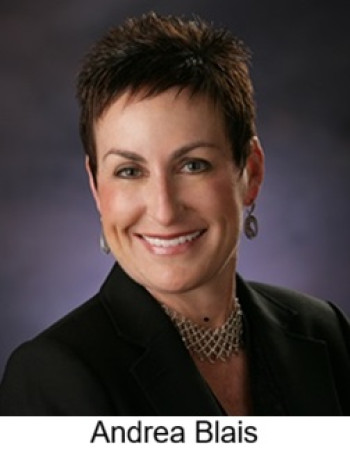
Andrea Blais leads real estate lending for SchoolsFirst Federal Credit Union, overseeing strategy, production, operations and loan administration. She brings 30 years of experience in mortgage banking and financial services, with a focus on credit union partnerships, capital markets and operational performance.
Andrea Blais leads real estate lending for SchoolsFirst Federal Credit Union, overseeing strategy, production, operations and loan administration. She brings 30 years of experience in mortgage banking and financial services, with a focus on credit union partnerships, capital markets and operational performance.
She rejoined SchoolsFirst FCU following
executive leadership roles in mortgage banking, most recently serving as Chief
Executive Officer of Community Mortgage Funding, a credit union service
organization supporting a broad range of mortgage products, including FHA and
VA loans, for credit unions and their Members.
Earlier in her career, Andrea held senior
leadership positions across the industry, including Vice President of Secondary
Marketing for OCTFCU Mortgage Co., LLC, and Director of Credit Union Services
at Pephens & Co., where she advised financial institutions on process
improvement, technology, risk management and strategic initiatives.